
- Home
- Company Information
- Message
Message
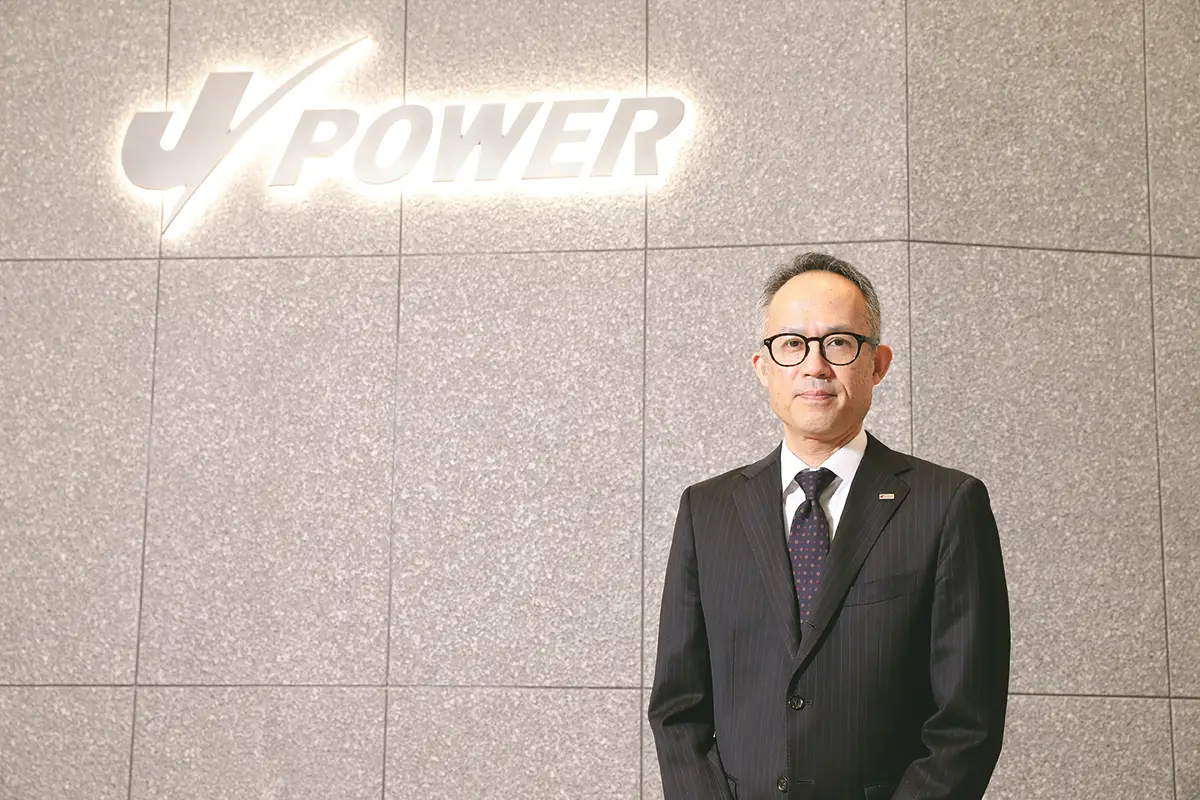
On Assuming the Office of President
My Responsibilities as the Chief Executive Officer
I am Hideaki Kato, and I assumed the office of President in April 2026. What I value most in management is continuing to deliver, in a stable manner, the electric power that supports society and industry.
Electric power is an indispensable social infrastructure that supports people’s lives and corporate activities, and no matter what changes occur in the environment, we must never allow its supply to be interrupted. I believe that continuing to fulfill this mission, with the responsibility and pride of a company entrusted with a highly public business, is the starting point of the J-POWER Group.
At the same time, J-POWER is also a private-sector company. While fulfilling our responsibility to support social infrastructure, we must respond flexibly to the changing business environment, achieve growth and enhance corporate value. I believe that my responsibility as the Chief Executive Officer is to achieve sustainable growth and enhance corporate value as a private-sector company while fulfilling our responsibility for a highly public business.
My career began at the Matsuura Thermal Power Plant in Nagasaki Prefecture, and I have gained experience in a wide range of fields, from the resources and energy frontline, such as fuel procurement for coal-fired power and the acquisition of interests in Australian coal mines, to human resources and corporate planning in the corporate division. Through these experiences, I have learned the importance of making realistic management decisions while carefully assessing the balance among stable supply, economic efficiency and environmental compatibility, however the environment surrounding the energy business may change.
Today, the environment surrounding energy is at a major turning point. Fluctuations in resource prices, the growing importance of energy security and the response to carbon neutrality have become important management challenges that directly affect the Company’s business environment and corporate value. In such an era, the role that the J-POWER Group should fulfill is to continue supplying the energy that supports society and industry in a stable and competitive manner, while advancing the transition to a decarbonized society along a realistic path. We will steadily fulfill this role and, through continued dialogue with our stakeholders, link these efforts to trust from society and to sustainable enhancement of corporate value.
The Role We Should Fulfill in a Changing Business Environment
The external environment surrounding our business is changing significantly, and we need to address multiple issues at the same time, namely energy security, decarbonization and rising electricity demand. Heightened geopolitical risks, including the situation in the Middle East, have once again highlighted the vulnerability of Japan’s energy supply, which depends on overseas resources, through the destabilization of supply chains and rising international prices for oil and LNG. In addition, in Japan, while the introduction of the emissions trading system (GX-ETS) has brought the costs associated with CO2 emissions to the surface, we also see changes in policy implementation, such as the lifting of operational restrictions on inefficient coal-fired power* in response to concerns over electricity supply. Precisely because of such changes in the environment, I believe that the importance of “S+3E” (safety, energy security, economic efficiency, and environment), the foundation of Japan’s energy policy, is in fact increasing. We need to steadily advance the transition to carbon neutrality, but in that process, we must make realistic decisions that also take into account the balance with energy security and economic efficiency. To balance stable supply with decarbonization, we need not only ideals but also the perspective of appropriately utilizing technologies that are actually available and our existing assets. Each option, including the expansion of renewable energy, the utilization of non-fossil power sources such as nuclear power, the decarbonization of thermal power, hydrogen and ammonia, and CCS, has both potential and challenges.
- * The operational restriction imposed on inefficient coal-fired power plants in the capacity market (a facility utilization rate of 50% or less) has been lifted for FY2026 only.
As the J-POWER Group, we need to make business decisions while carefully assessing the balance among not only environment but also stable supply, economic efficiency and feasibility.
Furthermore, we expect electricity demand to expand over the medium to long term, driven by the spread of AI and the increase in data centers. Since developing power supply facilities requires large-scale, long-term investment, planned investment in power sources that anticipates future demand is indispensable. I believe that this expansion in demand also represents a new growth opportunity for the J-POWER Group. While fulfilling our responsibility to support stable supply, we will also meet the new demands of society, namely the transition to a decarbonized society and the expansion of electricity demand.
Projected demand from the construction and expansion of data centers and semiconductor plants
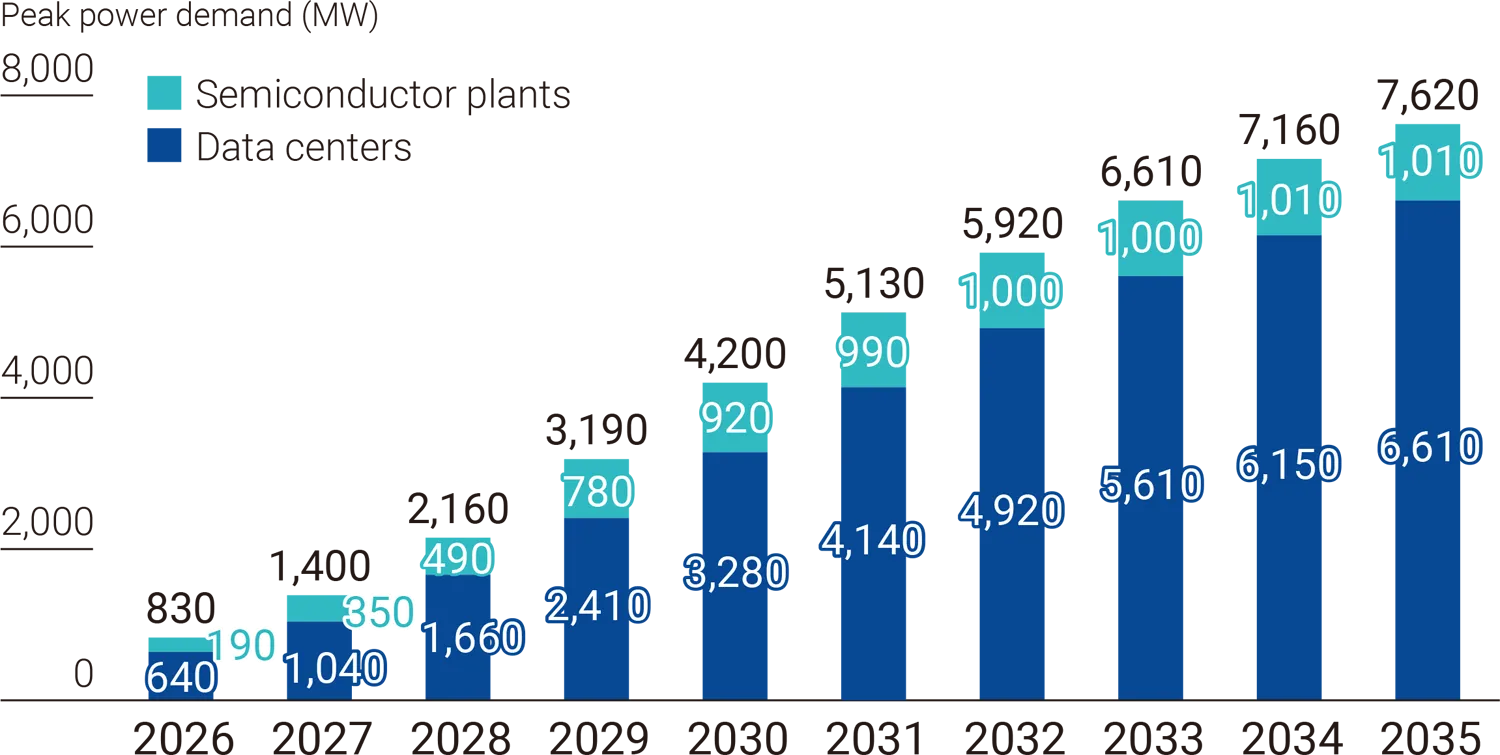
- Source: OCCTO “Forecast on Electricity Demand Nationwide and by Regional Service-Area (FY2026)”
Medium-Term Management Plan Progress
Review of Business Results and Thoughts on P/B Ratio Below 1.0 Times
The Medium-Term Management Plan 2024–2026, which we launched in FY2024, is now entering its final year. My first mission is, above all, to carry out this plan to its conclusion.
We expect to be largely able to achieve the targets set out in the plan for FY2026: ordinary profit of ¥90.0 billion, ROE of 5% and performing assets ROIC of 3.5%. Meanwhile, as a risk going forward, we must pay attention to the destabilization of supply chains accompanying developments such as a deterioration in the situation in the Middle East. Supply shortages and price increases for raw materials such as naphtha could push electricity demand below expectations by reducing operations at factories and construction sites, and we will therefore continue to monitor these developments closely.
We recognize that lifting our P/B ratio, which has remained below 1.0 times for a long period, is an important management challenge for the Company. Although it improved to the 0.5 times range in FY2025, it remains at a low level even compared with companies in other industries. We understand that behind this lies the fact that the capital market does not yet have a sufficiently clear view of the Company’s business direction over the medium term, including the Ohma Nuclear Power Plant Project and the transition of our domestic coal-fired power plants. In addition, by strengthening our earning power, we intend to improve ROE, which fell below the cost of equity in FY2025. While presenting our future vision and its financial impact more clearly, we will raise both our return on invested capital and our valuation by the market, and thereby improve the P/B ratio.
In particular, improving the earning power of our existing businesses is indispensable if we are to enhance capital efficiency while ensuring financial soundness. In the domestic business, we believe it is important to link the value of our renewable energy assets, which include hydroelectric and wind power and are among the largest in Japan, to the needs of customers seeking to decarbonize the electricity they use and to secure environmental value. In some respects, we have not yet fully monetized the environmental value of the CO2-free power sources that the J-POWER Group owns. By diversifying our sales methods, including the provision of environmental value through corporate PPAs and the integrated supply of electricity derived from hydroelectric power plants together with its environmental value, we will translate the value of our renewable energy assets into stronger earning power. At the same time, we are also working to expand our CO2-free power sources in order to respond to growing demand for renewable energy. In FY2025, the Kitakyushu Hibikinada Offshore Wind Farm, one of the largest offshore wind farms in Japan, began operation, and in FY2026 we are further expanding our renewable energy power sources through such initiatives as the start of full-scale construction of the NEXUS Sakuma Project and the advancement of offshore wind power development in Akita Prefecture.
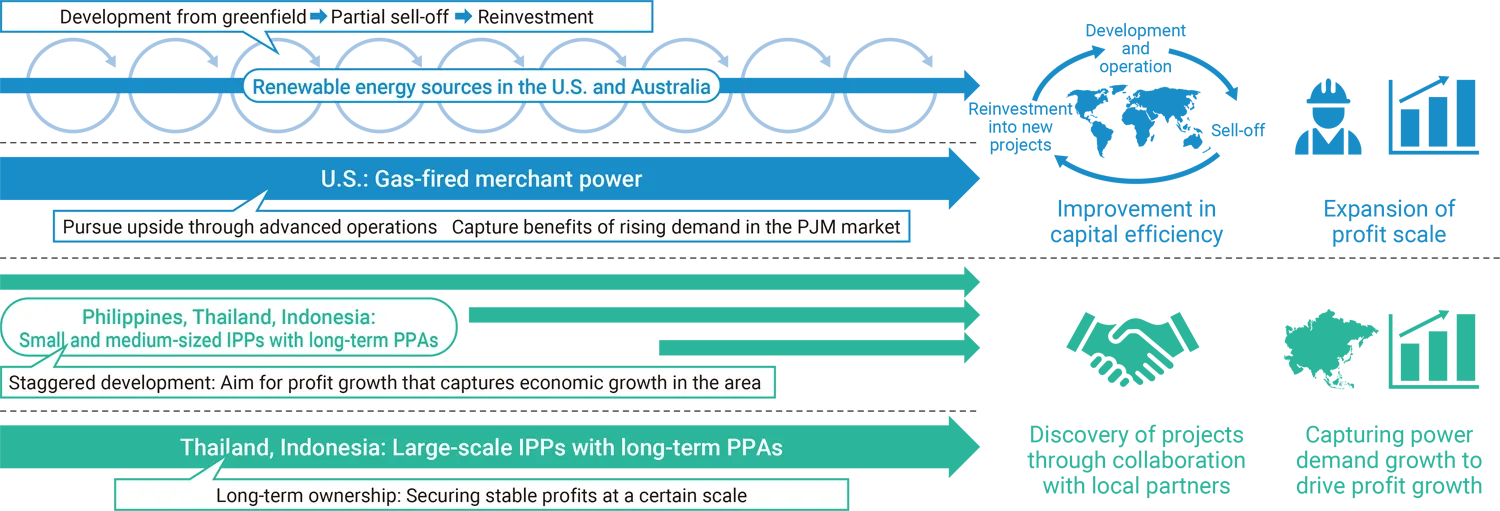
In addition, in the overseas business, we are developing operations that raise both capital efficiency and earnings stability in line with the market characteristics of each country and region. In regions where markets for buying and selling power generation assets are well developed, such as the United States and Australia, we combine new development with the sale of interests, accelerating the recovery of invested capital and reallocating it to the next growth investments, thereby improving capital efficiency. At present, we are developing our operations in these regions mainly in renewable energy, and in large-scale solar power in particular. In Southeast Asia, meanwhile, we are promoting the development of power generation projects on the basis of partnerships that we have built over many years. At the center of this development are projects accompanied by long-term power sales contracts, which will expand our stable earnings base. In recent years, hydroelectric power development has become increasingly active in Southeast Asia, and the J-POWER Group is also drawing on the expertise it has cultivated in its domestic business to participate in projects in Indonesia, the Philippines and Laos.
Overseas business model and J-POWER Group’s strengths
Progress on the Ohma Nuclear Power Plant Project
Advancing the Project and Dispelling Uncertainty
The Ohma Nuclear Power Plant Project, the greatest management challenge for the J-POWER Group, has reached a crucial phase. I position this project as an important management challenge that will determine the future of the J-POWER Group, and I am addressing it with a strong sense of responsibility. In May 2026, the Ohma Nuclear Power Plant won a contract in the FY2025 Long-Term Decarbonization Power Source Auction. This auction is a system designed to enhance the predictability of long-term investment recovery from the perspective of promoting new investment in decarbonized power sources. This successful bid has significantly improved the certainty of the investment recovery outlook for the project, and we regard it as steady progress.
In addition, the Nuclear Regulation Authority is conducting a conformity review. In May 2025, the standard seismic motion, a key site-specific issue, was finalized, and the plant review is now under way. Thereafter, we intend to obtain permission to amend reactor installation license and then move on to approval of the design and construction plan and to the review of the Specified Severe Accident Response Facilities, and once we obtain these approvals we plan to resume the large-scale construction work that has been suspended since the Great East Japan Earthquake. At the site, we are proceeding with preparatory work such as site development, within the scope not affected by the regulatory standards. We had previously targeted FY2030 for the start of operation, but in light of the current situation, we recognize that achieving that target is extremely unlikely. In addition to the considerable time required to obtain approval of the construction plan and to carry out test operation before the start of operation, we will need to make meticulous preparations to resume the large-scale construction work. Furthermore, we must also take into account the possibility that supply chain constraints across Japan will affect the schedule.
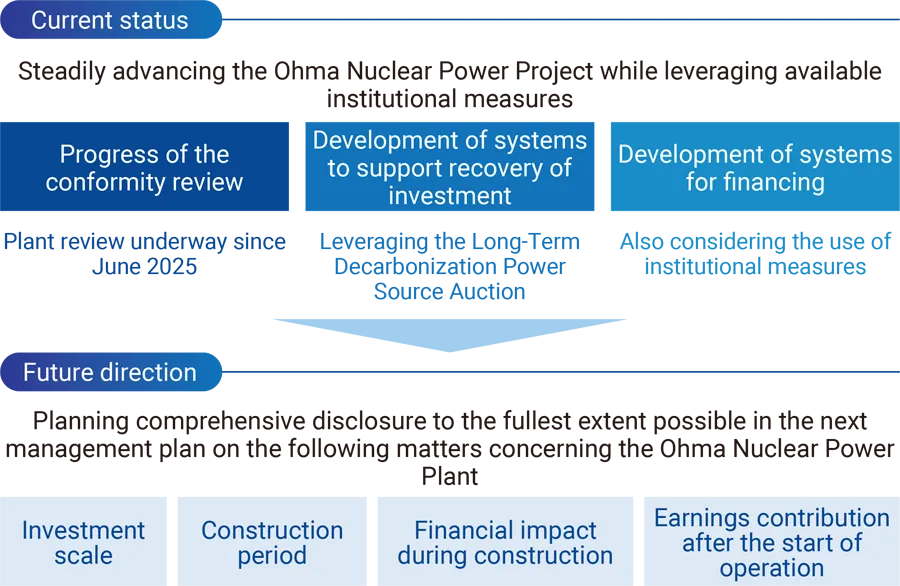
The start of operation of the Ohma Nuclear Power Plant will be a major milestone for the Company, but it is not the goal in itself. How will we get through the period leading up to the start of operation, and what kind of growth will we achieve once operation begins? I believe that setting out that path in a realistic and concrete manner is an important responsibility of top management. We believe that our priority issue at this point is to dispel the uncertainty surrounding the future vision of the J-POWER Group, including the Ohma Nuclear Power Plant Project, and we are therefore accelerating our deliberations about the next management plan.
Enhancing disclosure on the Ohma Nuclear Power Plant
Shareholder Returns
Stable and Flexible Shareholder Returns in Line with Profit Growth
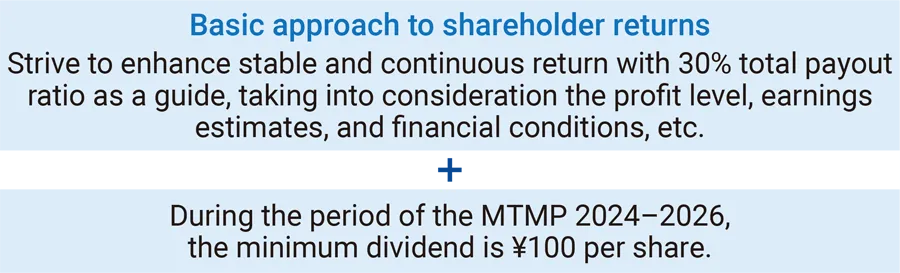
Our basic shareholder return policy is to provide stable and flexible returns in line with profit growth while maintaining financial discipline. The power generation business of the J-POWER Group follows a business model that recovers returns after long-term investment and development, and we have therefore made it our basic approach to increase dividends on the foundation of stable profits generated after the start of operation. At the same time, profits sometimes fluctuate substantially on a temporary basis due to factors such as the sale of overseas assets and changes in resource prices. Since reflecting such short-term profit increases directly in dividends could lead to dividend reductions from the following term onward, we introduced the total payout ratio, which combines share buybacks with dividends. The update to our basic approach to shareholder returns, announced in May 2025, reflects this thinking.
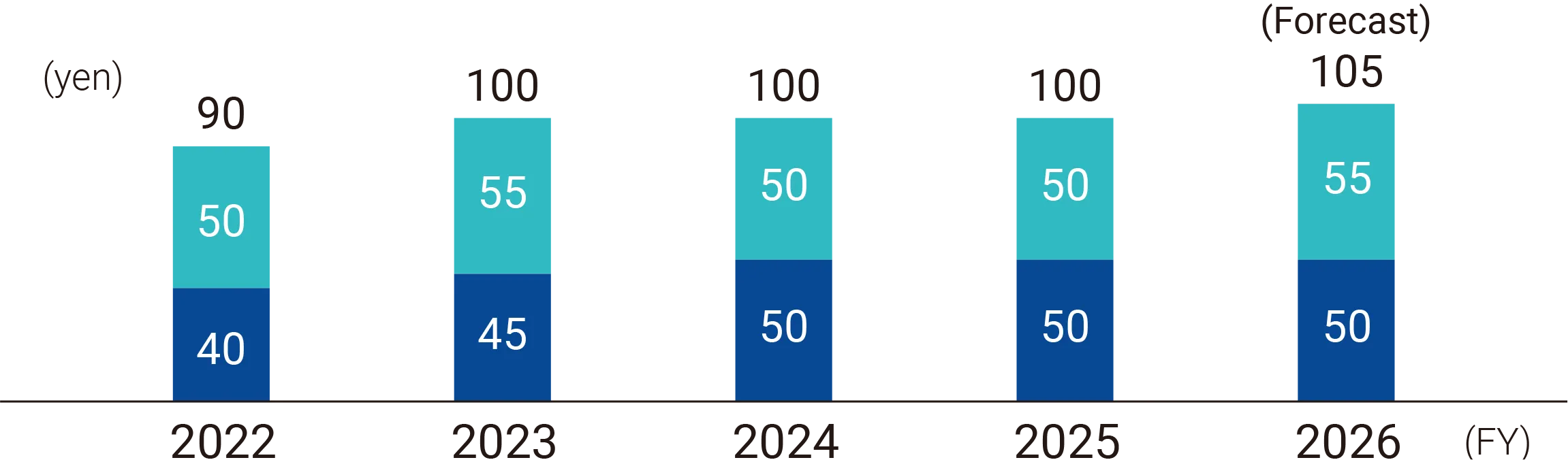
Under this policy, as we anticipated a certain degree of certainty in achieving ordinary profit of ¥90.0 billion in FY2026, we announced in May 2026 our plan to raise the annual dividend from ¥100 to ¥105 per share. In addition, taking into account the ¥20.0 billion share buyback conducted in FY2025, we expect that a total payout ratio of 30% is achievable during the Medium-Term Management Plan (FY2024-2026). Going forward, we will continue to maintain financial discipline and pursue management that emphasizes the balance between growth investment and shareholder returns.
Basic approach to shareholder returns
Trend in dividends per share
Preparing the New Management Plan
Presenting Our Vision for the Future and Plotting a Path to Enhancement of Corporate Value
We are currently advancing discussions toward the formulation of a new management plan covering FY2027 onward. In the new plan, we first intend to clearly present the future business portfolio that the J-POWER Group aims to build. What I place particular emphasis on is presenting a concrete path toward achieving that business portfolio. Looking ahead to the start of operation of the Ohma Nuclear Power Plant, we intend to show what kind of growth we will achieve beyond that point.
To realize our future business portfolio, we will clarify the role of each business and, while assessing growth potential, profitability and capital efficiency, formulate a business portfolio strategy that combines growth investment, asset replacement and allocation of management resources. In particular, the Ohma Nuclear Power Plant Project is an important project that will have a major impact on our future business portfolio and corporate value. Accordingly, we intend to disclose as comprehensively as possible the information investors need to assess our medium- to long-term profile, including the scale of investment, the construction period and the financial impact during the construction period. At the same time, taking the start of operation of the Ohma Nuclear Power Plant as a milestone, we intend to present our financial outlook along separate time horizons: the outlook for the immediate future, the outlook through to the start of operation, and the outlook incorporating the earnings contribution after operation begins. In these deliberations, we will engage in ongoing dialogue with investors and make the plan concrete while also reflecting the perspective of the capital markets.
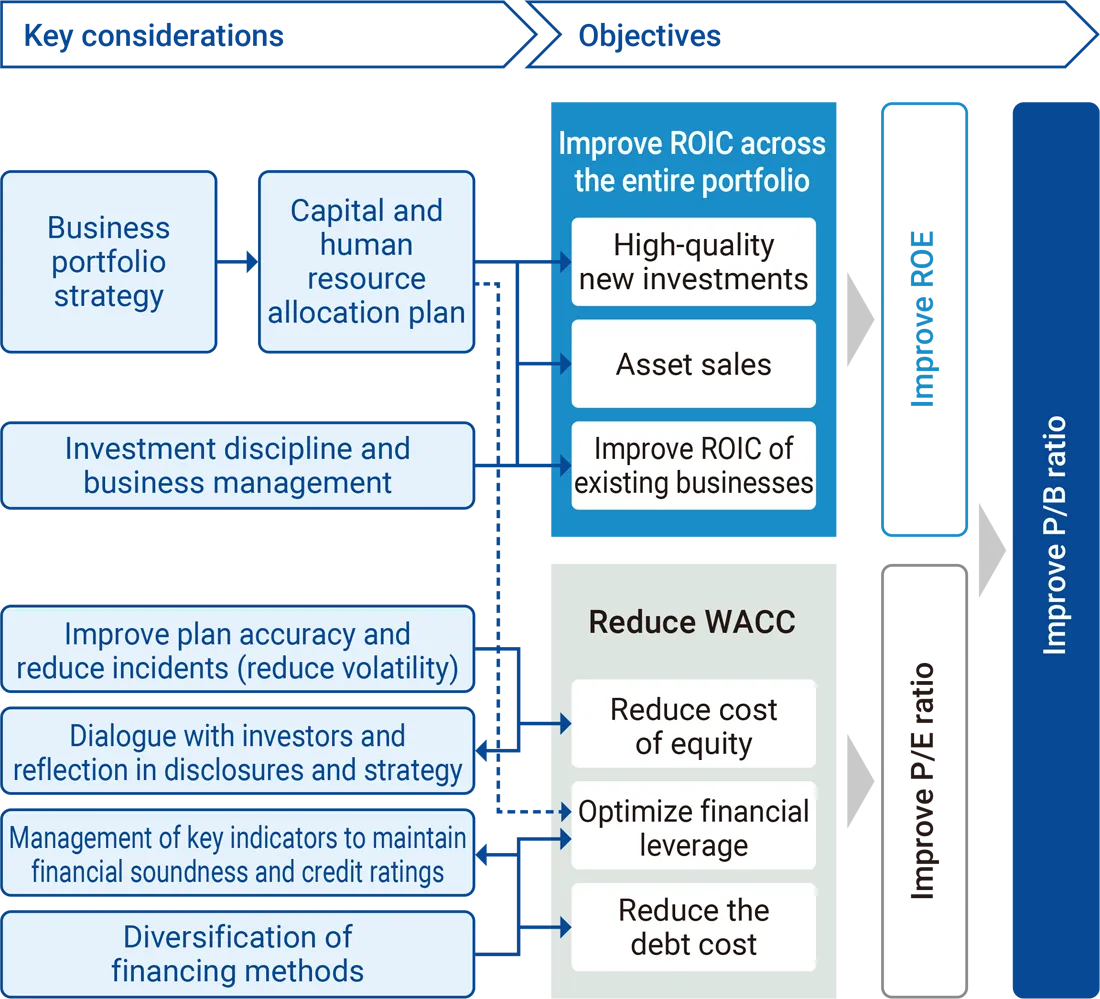
In addition, to enhance corporate value, we will work on improving ROIC and reducing WACC as two wheels of the same effort. Specifically, we will raise the ROIC of our entire business portfolio through high-quality new investments and the timely replacement of assets, while reducing WACC by lowering our cost of equity and optimizing financial leverage. Through these efforts, we intend to improve ROE and P/E ratio, and thereby lead to an improvement in the P/B ratio.
Building a framework for enhancing corporate value
Promoting Sustainability
A Realistic Path that Balances Stable Supply with Decarbonization
Balancing a stable energy supply with response to climate change is an important mission that the J-POWER Group must fulfill. Given the increase in electricity demand accompanying the full-scale arrival of an AI-driven society and the destabilization of energy supply caused by geopolitical risks, a realistic path that simultaneously secures stable supply and economic efficiency is indispensable, including in advancing decarbonization.
I believe that steadily advancing the transition to decarbonization is indispensable to this end. At the same time, to maintain a stable supply of electricity and Japan’s industrial competitiveness, we also need a realistic perspective that advances the transition while appropriately utilizing available technologies and existing assets. To that end, we need to pursue an energy mix that combines multiple options, centering on renewable energy while also drawing on non-fossil power sources including nuclear power, the decarbonization of thermal power, hydrogen and ammonia, and CCS. Because such diversification of power sources entails large-scale, long-term investment, institutional design that allows private-sector operators and financial institutions to foresee the recovery of their investments is also important. Power supply capability and electricity costs are issues directly linked to Japan’s industrial competitiveness, and achieving decarbonization requires a framework through which society as a whole supports a realistic transition. Without relying excessively on any particular technology or power source, the J-POWER Group will advance its decarbonization initiatives by combining multiple options while carefully assessing safety, economic efficiency and feasibility. Going forward, we will continue to fulfill our responsibility to support stable supply while proactively working on a realistic and steady transition to carbon neutrality.
Growing Together with Society by Making Diversity a Strength
In our human resources strategy and corporate governance, we position the securing of diversity as an important theme. While the J-POWER Group, which is grounded in the electric power business, possesses a high level of expertise, it also has an aspect in which the perspectives of its human resources and organizations can easily become limited. In addition, as a company responsible for social infrastructure, we require each and every employee to maintain high ethical standards and act responsibly.
I believe that what matters most in human resources is an attitude of learning from different values and experiences rather than confining oneself to one’s own field of expertise. We are working to develop human resources who can incorporate diverse values and outside perspectives and put into practice judgments and actions that earn the trust of society. At the same time, we will advance governance reforms, beginning with the appointment of women as Outside Directors, incorporate diverse perspectives into management and link them to better decision-making.
Engagement with local communities is also an important element of the social responsibility that the J-POWER Group must fulfill. The J-POWER Group has developed businesses in various locations in Japan and overseas, expanding its business foundation while building relationships of trust with each host community one by one. Our attitude of engaging sincerely with local communities and advancing our businesses while earning their trust is a valued corporate culture that we have cultivated over many years. Even today, we continue initiatives to share culture and values through participation in local events and other activities and to deepen our understanding of local communities. Based on this attitude, we place importance on each employee having a perspective that is not confined within the Company and on learning from points of contact with local communities and society.
Going forward, we will continue to value the corporate culture cultivated on relationships of trust with local communities, incorporate diverse values into management and work to build an organization that supports sustainable growth.
Message to Our Stakeholders
The J-POWER Group has inherited both the responsibility of supporting electric power as social infrastructure and a corporate culture that takes on the challenge of change and creates new value. Drawing on these two as strengths of our management, I will work to balance a stable supply with decarbonization, evolve our business portfolio and enhance our earning power and capital efficiency.
The environment surrounding energy will continue to change significantly, driven by geopolitical risks, the response to decarbonization and rising electricity demand. Precisely because this is an era of high uncertainty, I believe it is important not to remain at the level of philosophy alone but to build up our judgments while squarely facing the changes actually taking place. The J-POWER Group aims to achieve sustained profit growth through growth investment and stronger earning power in existing businesses, while continuing to supply the energy that supports society and industry in a stable manner. At the same time, we will maintain financial discipline and advance management that emphasizes improved capital efficiency and shareholder returns, steadily linking these efforts to enhancement of corporate value. While balancing our responsibility for businesses of high public interest with our stance of pursuing enhancement of corporate value as a private company, we will continue our dialogue with investors and other stakeholders, present a concrete vision of our future and devote our full efforts to realizing it.
Squarely facing the changes actually taking place, we will take on the challenge of building an energy foundation that is sustainable for future generations as well.
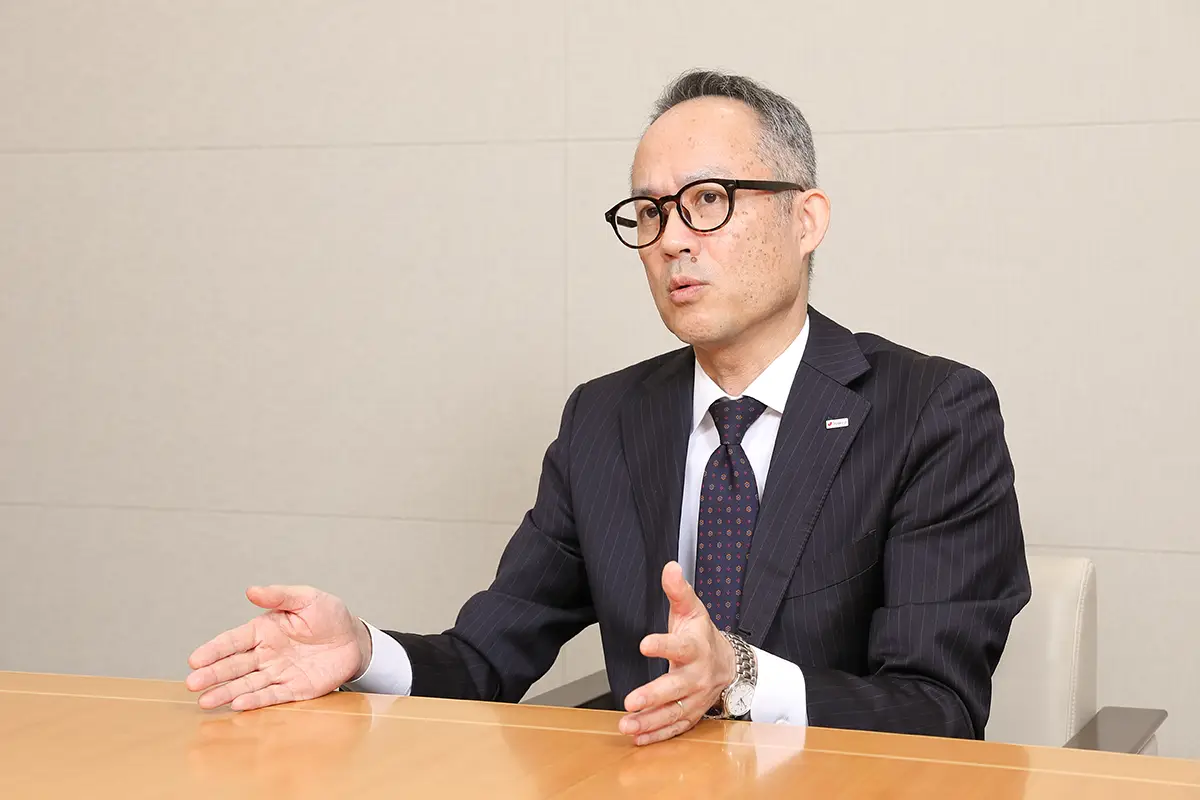
September 2026
Hideaki Kato, President and CEO, Electric Power Development Co., Ltd.